It Was Their Time: Grief Lessons Learned In India
The anniversary of my late father’s death hit me differently this year. I credit Ali and a sound bath in India two years ago for rewriting the grief narrative in my head that played on repeat year after year.
******
I spotted the shop’s wooden sign: Alibaba Arts, tucked just around the corner from our hotel, and found myself barefoot, stepping into a large metal bowl as if this were the most natural thing a 51-year-old mother of four could do halfway around the world with a total stranger.
I had to trust the moment, and the odd, magnetic force that pulled me into Ali’s shop.
I stood still, eyes closed, as Ali banged the brass-looking bowl with a cloth-covered mallet—ten, twenty times, without pause. I could sense him moving around me as the vibrations rose from my feet, up through my legs, my chest, my teeth.
In his other hand, he held a smaller bowl, which he tapped as he circled it around my head. Tapping alternated between the bowl beneath me and the one above, the sound shifting from deep and thunderous to light and metallic. Vibrations rippled through me, reverberating from the top of my skull to the soles of my feet and back again.
I tried not to peek.
“You have been suffering, or carrying something heavy,” he said, reading my mind as I stepped out of the bowl.
“Why me? Why do I suffer such loss so early?” I asked aloud in his cluttered little shop that smelled like sandalwood and metal polish.
Ali nodded gently. “The past is the past,” he said. “And while it’s normal to feel sadness… it was their time.”
Those words sat with me.
It was their time. And I had no control over that.
Ali continued. “What you need to know is — it’s not your time yet. You are still here for a purpose.”
He encouraged me to focus my mind on the present. The past is gone. Live one day at a time.
“The only thing that matters,” he paused, “is your health. Just pray to God — and the universe — for good health.”
******
This week I Googled for any trace of my father’s obituary—32 years later—to confirm the date of his death, so I could “properly” mourn it.
At the 25-year anniversary mark, grief meant a trip to Cannon Beach on the Oregon coast with my kids, rather than burying my head under the covers in bed to escape the familiar weight of loss. The ocean was my happy place as a child, back when my father would grab me by the belly and hoist me over his broad, sunscreen-slick shoulders, carrying me like a captive prisoner from sandcastle construction with my brother in Ocean Grove, New Jersey. That day on Cannon Beach, seven years ago, I chose to make similar memories with my four children, and we built a humongous sand tunnel for the record books. I can still feel the grainy sand between my toes if I try. We took turns crawling through the cool narrow tube, the dogs included, emerging from darkness into the Oregon sunshine.
This year there was no dread for an anniversary I couldn’t escape.
Having died in 1994, before the internet really took off, there was also no treasure trove of data to uncover on my late father. My late brother Brandon’s photo kept popping up as a not-so-subtle reminder that I’d lost not one, but two important men in my life.
I have to admit, it’s Groundhog Day every year for me around the end of August. My life was forever altered by one phone call in the middle of the night that rattled my soul and the ground beneath me with hurricane force. My father was gone, and my 20-year-old self could not fathom living the rest of my life without him. It’s no wonder I can’t remember that date.
Was it August 24th or 26th, 1994?
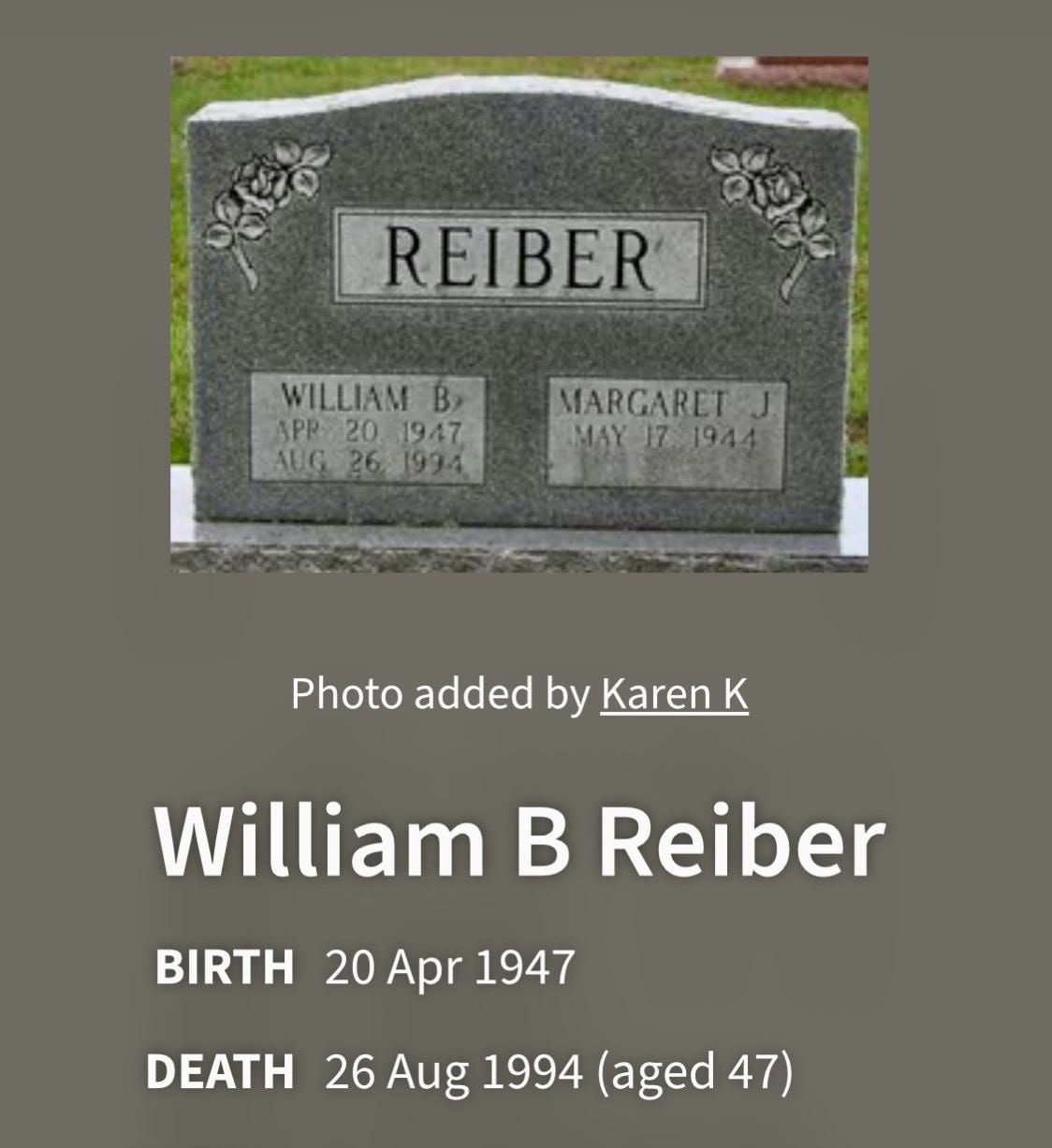
Last night I searched three cemeteries in Elkhart, Indiana, where he was laid to rest in the middle of the country, and found that Karen K. had snapped a photo of the tombstone. God bless Karen for taking the photo. Now I have the visual proof I can return to next August, when my brain inevitably asks again: Was it the 24th or the 26th?
The granite tombstone confirmed: August 26th. It also confirmed that my 82-year-old mother would be buried beside him someday—because, well, it was etched in stone. I’m content knowing that I can choose to add my 48-year-old brother’s cremains someday because, to me, that would be closure. Also, because who doesn’t want to visit Elkhart, Indiana?
******
Walking in a zen-like trance around the corner to the hotel in Pondicherry, India, sound bath energy still reverberated warmly through my torso as rain dripped down my forehead. I smiled and reached back, fumbling with my ponytail.
Inside me, something glowed. A warm, golden pulse seemed to radiate from my core.
I sat outside my room, letting the sensations settle. My grief was loosening its grip, and something inside me was beginning to soften.
“Trust the universe,” Ali had said. “Pray for your path. It will come.”
It was not my time. Maybe my angels wanted me to be at peace with that.
******
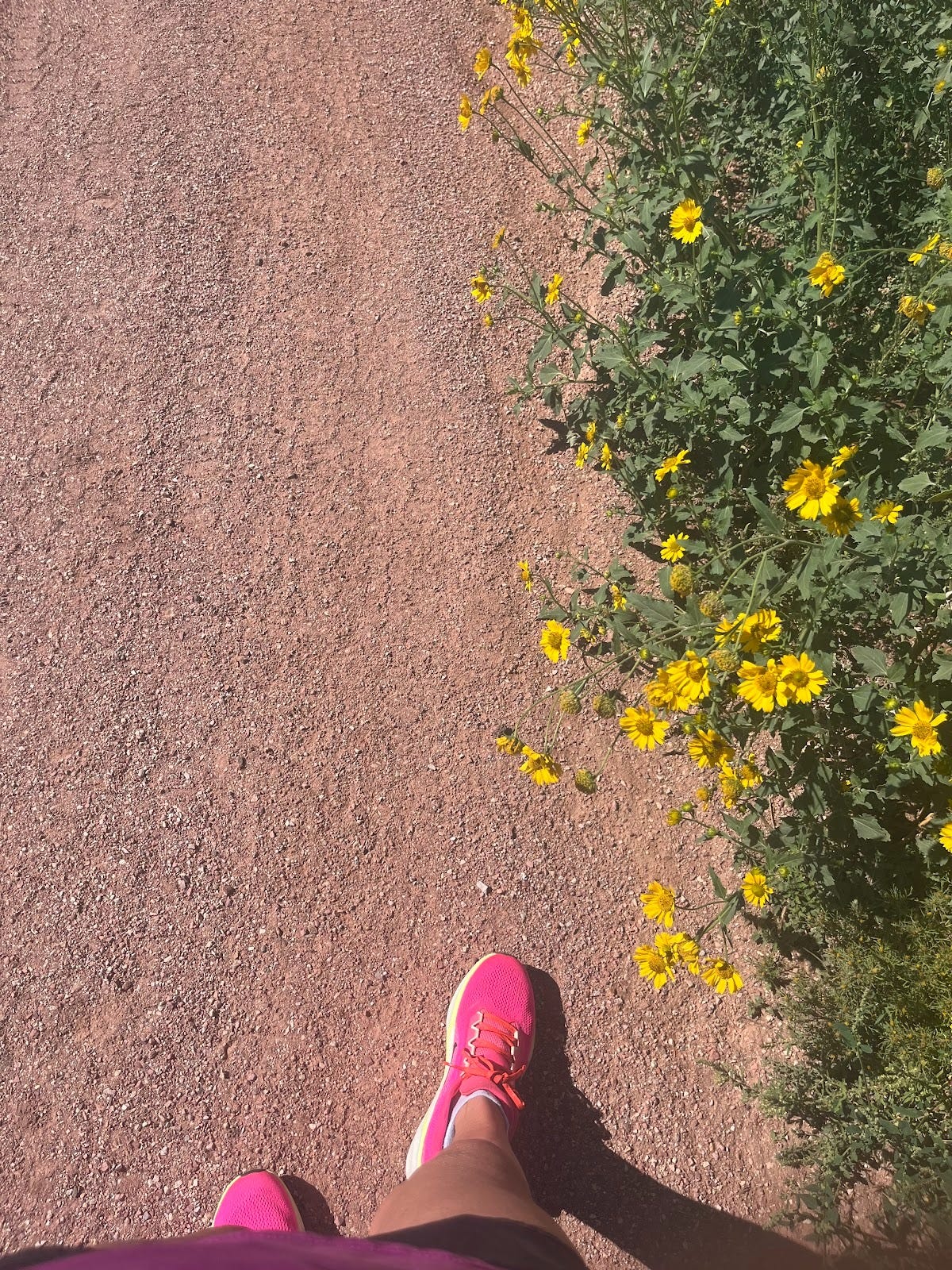
As my feet pounded the gravel path this morning, I was reminded of a time, decades ago, when I pushed a tandem stroller around the same uphill loop with our first Schnoodle on a leash. A lifetime ago, when I had four kids under the age of seven. Back when my brother was still alive, and I ran with my original knee.
Time passes, and we have no choice.
It was their time.
This time there were no tear-stained cheeks. Just a quiet contentment that comes with age and knowing.
India taught me to carry my losses differently.
“Move forward, not back,” Ali urged me in India two years ago. It was then that I decided to write a memoir, Grief, Grace, and Garlic Naan, and put faith in myself.
New purpose.
My third act.
To write the stories my father and brother never had a chance to share.
And to believe I could.
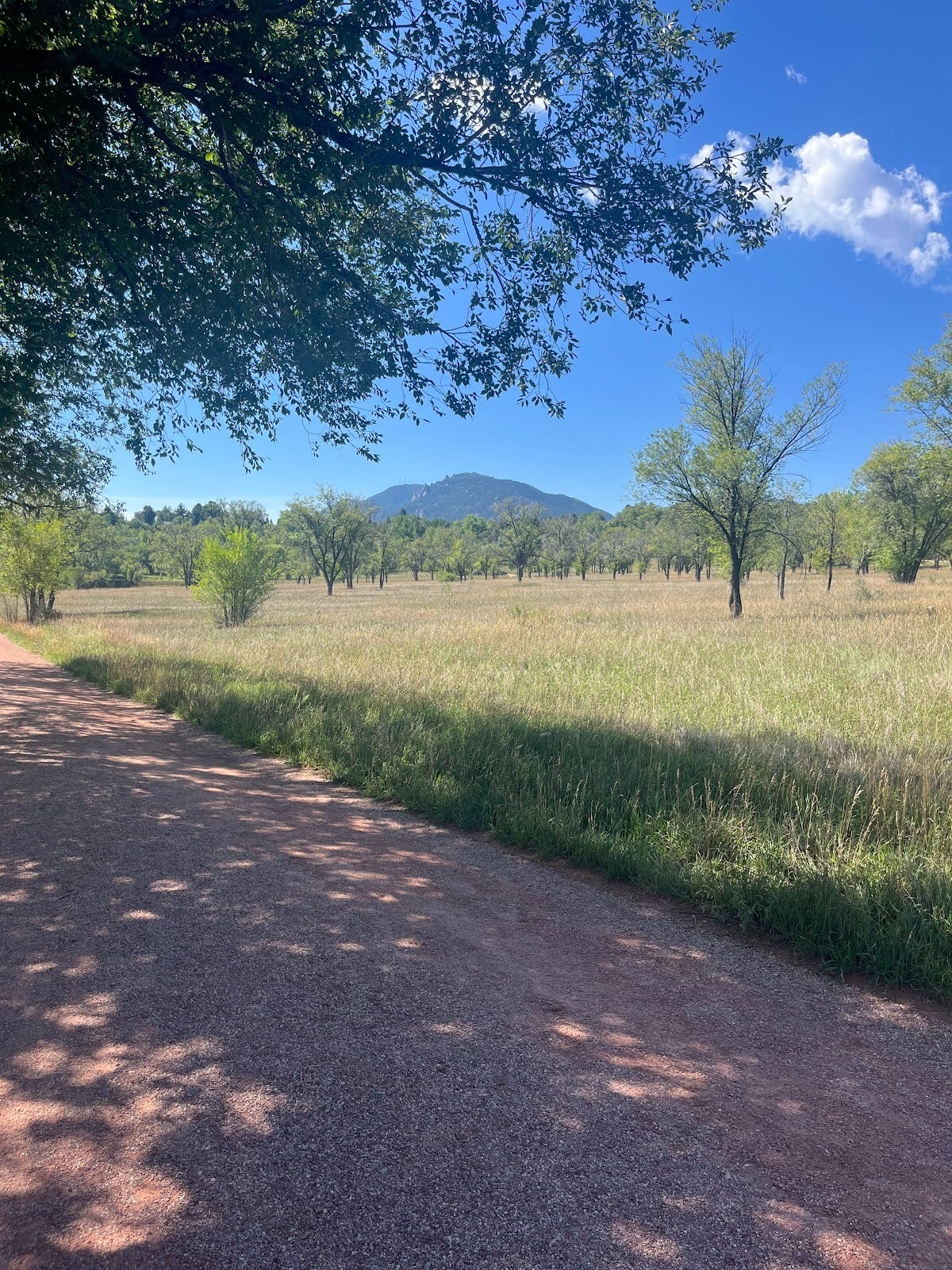
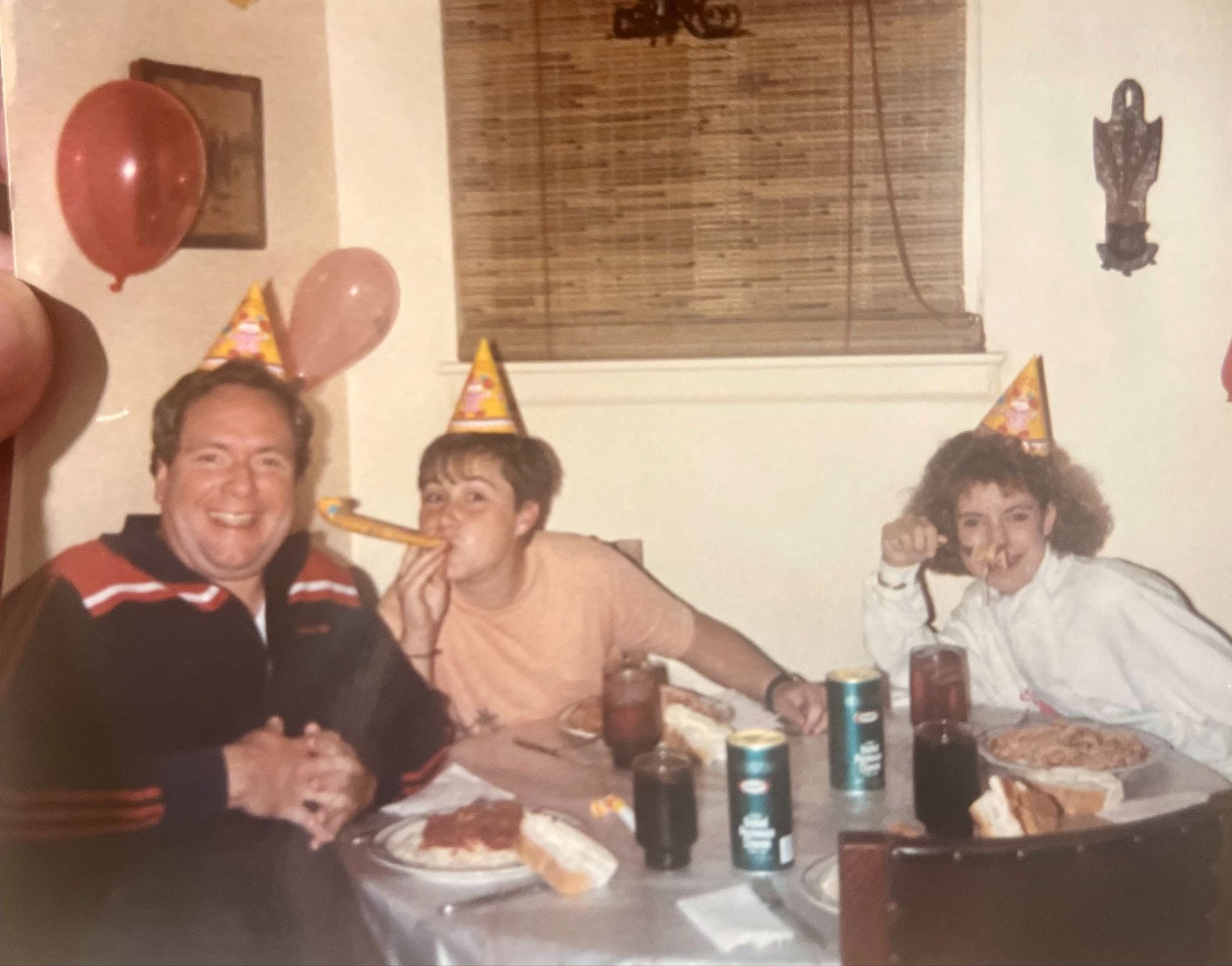
Today, with Cheyenne Mountain as my witness, I chose health. I chose the endorphins. And I chose to write it down, so I’ll always remember. Like Dad’s famous spaghetti sauce recipe.
Comments
Post a Comment